
See where project money stands, as approved activity builds.
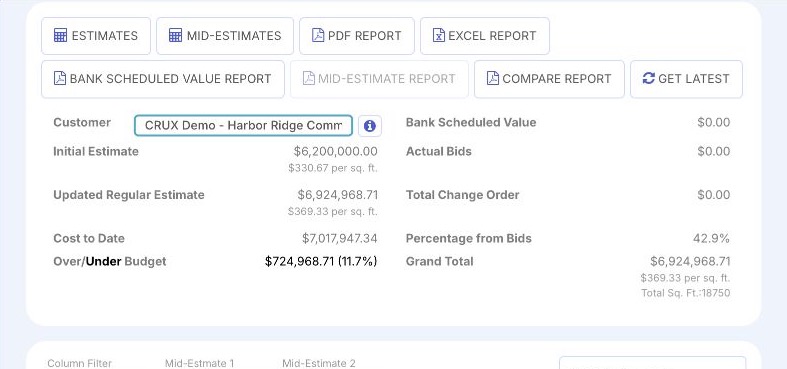
Budget vs Actual is the project financial picture leadership uses while the work is progressing. It is built from approved activity, so pressure shows up as it happens, not after month-end and not after accounting closes.
The same picture answers a different question.
Owner, controller, and project manager each look at the budget for a reason that is theirs.
Which jobs need my attention, and why?
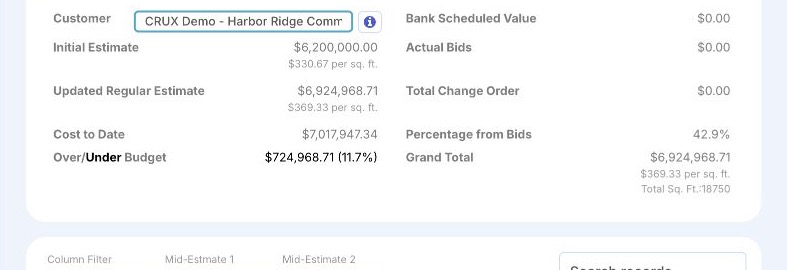
Crux surfaces portfolio budget health and what changed, so the first look lands on the right project.
- Reads variance across the whole book of work.
- Spots the jobs moving off plan before month-end.
- Result: attention on the project that needs it.
Is this picture built from approved activity?
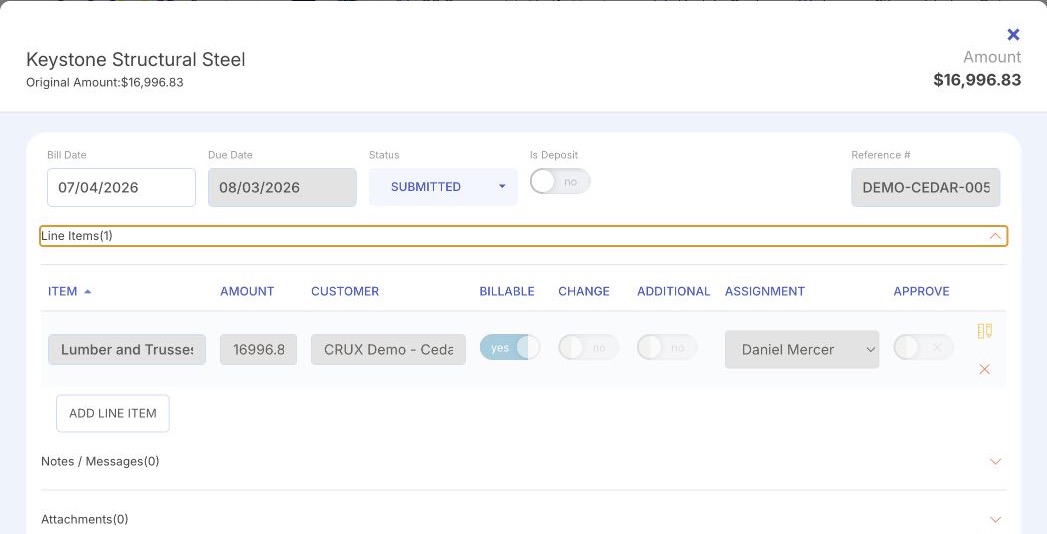
Crux surfaces how approved and committed cost roll into the project view, so the numbers are defensible.
- Checks approved versus committed by cost code.
- Resolves coding and exceptions feeding the budget.
- Result: a budget picture leadership can trust.
Is my job tracking to budget as costs come in?
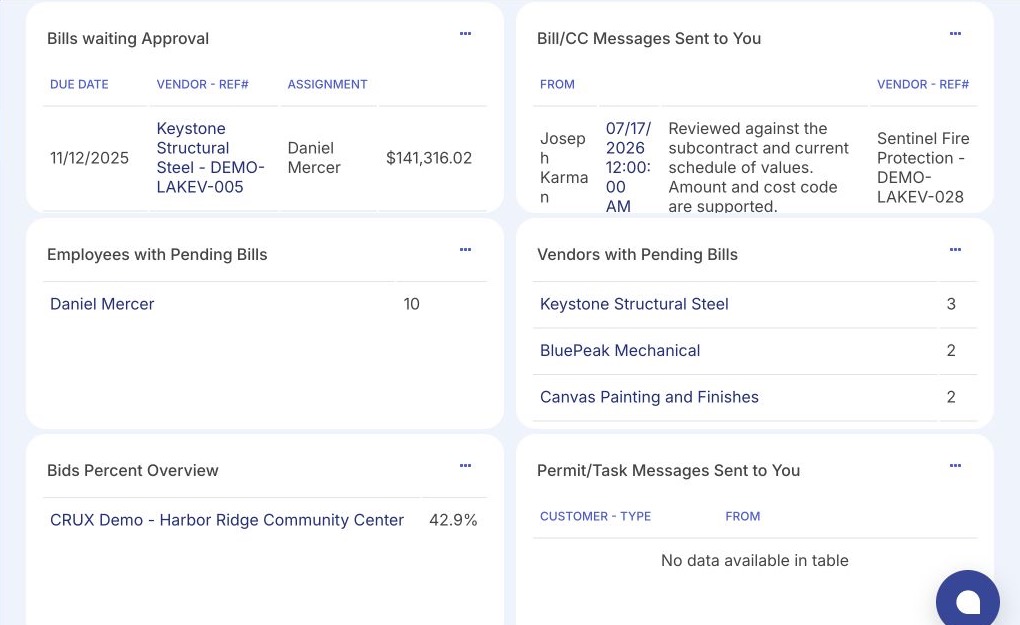
Crux surfaces budget against committed cost by cost code, while the work is still moving.
- Watches the cost codes under pressure on the job.
- Sees where committed cost is closing on the budget.
- Result: a call made on time, not after the fact.
Leadership should not learn the numbers last.
When budget versus actual is assembled by hand from the books, it arrives after the work that shaped it. By then, leadership is reacting instead of steering.
- Actual cost is known weeks later.
- Budget variance surfaces after accounting closes.
- Leadership finds out once it is already a problem.
- Approved and committed cost show against budget as they land.
- Pressure on a job is visible early.
- Leadership can act before month-end.
From budget to a leadership decision.
The project number is not static. It moves as commitments and approvals land, and Crux keeps each change visible.
Budget
- What changed
- The plan is set by cost code for the project.
- Who sees it
- The project team and finance.
- Why it matters
- It is the baseline everything else is measured against.
Committed
- What changed
- A commitment or purchase order is recorded against a code.
- Who sees it
- Project manager and finance.
- Why it matters
- Money is spoken for before the bill even arrives.
Approved
- What changed
- An approved bill lands against its cost code.
- Who sees it
- Project manager and finance.
- Why it matters
- Approved cost is real activity, not an estimate.
Variance
- What changed
- Budget against committed and approved cost updates.
- Who sees it
- Leadership, controller, and project manager.
- Why it matters
- The gap shows where the plan and reality differ.
Attention
- What changed
- A project moves off plan.
- Who sees it
- Owner and project manager.
- Why it matters
- It marks where leadership should look first.
Leadership action
- What changed
- A decision is made about the pressure on the job.
- Who sees it
- Everyone accountable for the project.
- Why it matters
- The issue is addressed before month-end, not after.
Approved, committed, and actual are not the same number.
Crux keeps these distinct on purpose. Collapsing them into one figure is how a project looks fine right up until it does not.
Remaining 430
Illustrative figures, in thousands. Pending activity affects the budget picture only as it is approved. No production formula, timing, or immediacy is implied.
What the gap is telling you.
The variance is a signal. Leadership reads it to decide where to look, and how soon.
Approved and committed cost sit within budget by cost code. No action needed yet.
Committed cost is climbing toward the budget line. Worth a closer look.
Approved or committed cost has passed the budget on a code. This is where leadership starts.
Crux shows the variance and the underlying cost. How your team defines what counts as a warning or an exception is set for your organization; Crux does not impose a fixed threshold here.
Budget visibility in Crux. The accounting record in QuickBooks.
The operational budget picture is built and read in Crux. Approved activity proceeds toward QuickBooks®, which keeps the accounting record.
- Budget vs committed and approved cost
- Variance and where to look first
- The operational financial picture

- Accounts payable and ledger
- Actual posted cost
- Financial statements
QuickBooks is a registered trademark of Intuit Inc. Crux is independent and not affiliated with, endorsed by, sponsored by, or certified by Intuit.
See where your project money really stands.
A working session looks at how you track budget today, where the picture arrives late, and how Crux builds it from approved activity while the work is moving. It is a conversation about your process, not a production setup or a data migration.